
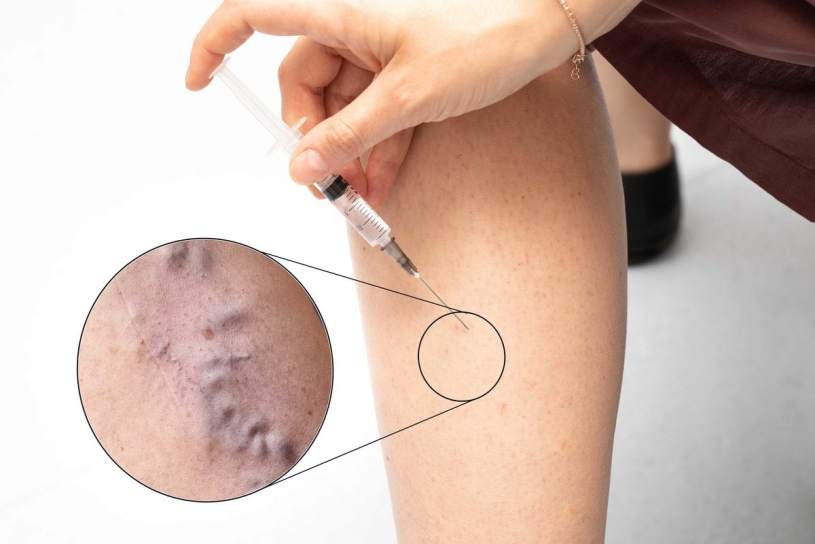
Even though millions of people in the United States suffer from varicose and spider veins, they often misunderstand the conditions and their treatment, especially sclerotherapy. Sclerotherapy is a trusted, easy, painless, and quick treatment to eliminate bulging and painful veins without downtime. Since so many myths surround sclerotherapy, people refuse to get the treatment and lose the benefits.
That is why it is important to separate the truth from the myth so that everyone can decide whether they should get the procedure done. To learn more about sclerotherapy and clear your doubts, you can speak to a medical expert today. Meanwhile, here are some common myths about sclerotherapy.
Myths and facts about sclerotherapy
- Sclerotherapy requires pulling out of the veins.
False. Many people believe that doctors pull out the affected veins from your body during the sclerotherapy treatment, which is completely false. In reality, the treatment is very non-invasive and is not a surgery.
During sclerotherapy, the doctor injects a very thin needle into your affected veins and injects a solution that collapses the vein walls and seals them off. The affected veins soon disappear and dissolve, rerouting the blood to the other healthier veins.
- Sclerotherapy is painful.
Sclerotherapy is non-surgical and not painful at all. The procedure is as follows:
- You lie down on a table with your knees a little bent.
- Using a thin needle, the doctor injects a solution to treat the affected veins.
- The doctor puts pressure over the veins to ensure the solution reaches the entire vein.
- The vein walls collapse and seal off.
Patients usually do not feel more than a little sting during the injection. Still, if you have a fear of needles, you can ask the doctor to use anesthesia.
- Sclerotherapy is the only treatment for varicose veins.
Sclerotherapy is one of the many treatments for varicose veins and one of the most opted for. Other treatments include laser treatment, catheter-based procedures using radiofrequency, high ligation and vein stripping, and ambulatory phlebectomy. Of them, sclerotherapy and laser treatment are the most opted for as they are non-surgical, have few risks, and cause no pain.
- Veins come back after sclerotherapy treatment.
Sclerotherapy makes sure that the affected veins are completely destroyed and removed. Therefore, the same veins which were treated will not come back. However, you may develop new varicose or spider veins in the following years after sclerotherapy and may have to get the treatment again. You can reduce the chances of varicose veins by eating a healthy diet, exercising, and using compression stockings every day.
 Wellness Care Health Blog