
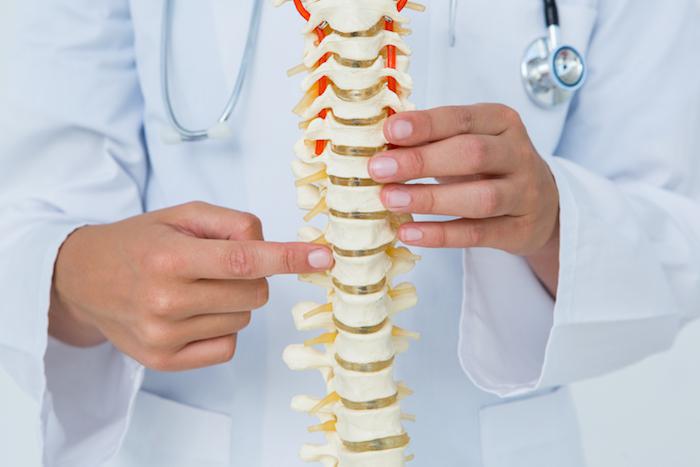
The vertebrae are a series of bones that form the spine in the back; between each bone lies a round, pillow-like disc that cushions the vertebrae. Each vertebra has a soft inner core called the nucleus and a surrounding tough layer called the annulus. Over time, degenerative changes occur in the discs; for example, they may dry out, or a tear may form in the annulus; when a tear or weak spot forms in the outer membrane, some of the nucleus may push through, limiting the space in the spinal canal. A Roswell herniated disc can occur in any spine region but is common in the neck (cervical) and lower back (lumbar) regions.
Symptoms of a herniated disc
Symptoms of a herniated disc vary depending on the location and whether the displaced disc is pressing on nerves. If a herniated disc is not pressing on a nerve, a patient may experience backache or have no symptoms. But when nerves are pressed, you may experience other symptoms besides pain. For example, you may have numbness, tingling, and weakness in the body areas to which the affected nerves travel. Usually, an episode or a long history of intermittent back pain episodes precedes a herniated disc.
A herniated disc in the lower back often results in sciatica or radiculopathy. If one or more nerves that contribute to the sciatic nerves are pressed, you may have pain, burning, tingling, and numbness radiating from the buttock to the leg. You may also feel the pain in the foot. Patients with sciatic pain describe the pain as electric shock-like or sharp. It often affects one side of the body and worsens with sitting, standing, or walking. Stretching or straightening the leg on the affected side can exacerbate the pain. Besides leg pain, you may also have low back pain, but for acute sciatica, leg pain is usually more severe than back pain.
What causes a herniated disc?
A herniated disc is mainly a result of disc degeneration that naturally occurs as you advance in age. As you grow older, the discs become prone to tears even with a minor strain or twist. Other times a herniated disc can occur when you lift heavy muscles using the back muscles instead of the leg and thigh muscles. Although rare, a herniated disc may also result from a fall or blow to the back. While anyone can have a herniated disc, some people are more vulnerable to disc problems due to factors such as:
- Occupation. You may be at risk of a herniated disc if your job is physically demanding. For example, activities that involve repetitive pulling, lifting, pushing, twisting, and bending sideways put you at risk of a herniated disc.
- Weight. Extra body weight causes additional stress on the intervertebral discs, speeding degenerative changes. Losing extra pounds can help lower your risk of a herniated disc and other health problems like type 2 diabetes, hypertension, and obstructive sleep apnea.
- Genetics. A predisposition to herniated discs exists in certain families; individuals in those families are at risk of a herniated disc.
- Smoking. Nicotine narrows blood vessels, limiting blood and nutrients supply to the discs. Consequently, the discs break down more quickly.
If you have further questions about a herniated disc, consult your APEX Spine and Neurosurgery provider.
 Wellness Care Health Blog