

Over the course of the last ten years, dental implants have exploded in popularity and become one of the most popular dental solutions for replacing missing teeth. Technological advancements have made dental implants better and more accessible to patients, which is why they’re so prevalent today. Let’s look at how dental implants have improved the lives of countless patients in recent years, and why you should schedule an appointment with your local dentist if you want to reclaim a smile to be proud of.
Introducing dental implants
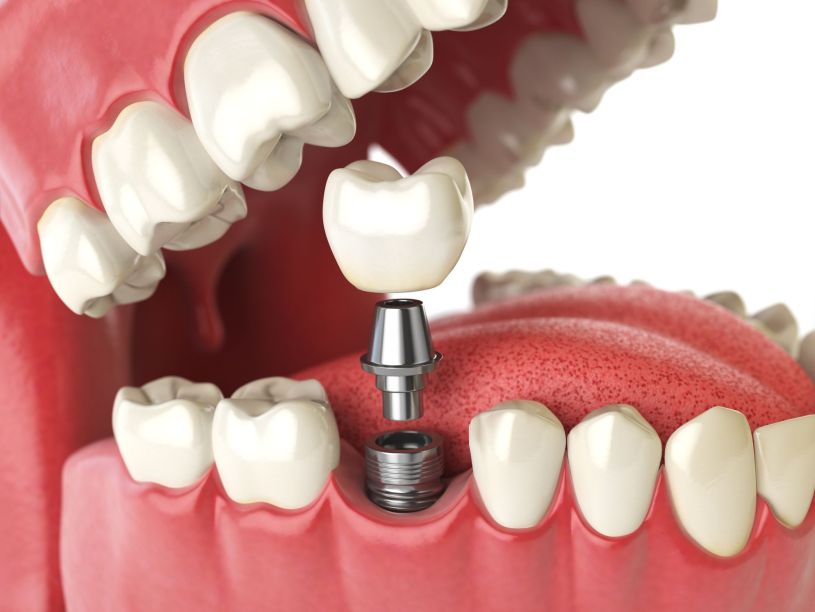
Dental implants consist of a titanium screw and an abutment that form the foundation of a false tooth. Your dentist will attach the screw to your jawbone, which will then grow around the implant and hold your new tooth firmly in place. The great thing about dental implants is that they can be customised to suit your oral health and dental requirements. What’s more, a single dental implant can be enough to support multiple teeth, so you don’t necessarily need to have an implant for every tooth that you have lost.
How do dental implants work?
The process of dental implants can vary from patient to patient. That being said, it’s durable and long-lasting, and most people who opt for dental implants see excellent results. However, one thing to note is that dental implants take quite a long time, typically anything between three and nine months’ worth of treatment, which is broken down into the following stages:
- Stage 1: Extraction of the problem tooth if it is still in your mouth.
- Stage 2: If extra support is required in the jawline, your dentist will perform bone grafting.
- Stage 3: The titanium screw will be placed into your jaw.
- Stage 4: The abutment will be attached to your dental implant.
- Stage 5: The fitted implant will fuse with the surrounding bone to make a base for your tooth or teeth.
- Stage 6: It’s now time to construct and fit your new false teeth onto the implants.
While the process of dental implants is extensive, not all of these stages will be required for every patient. Also, the progression of technology and the use of modern anaesthetics mean that the process is entirely painless, so you don’t need to worry about it!
What happens in the aftermath of your dental implant treatment?
In the immediate aftermath of your treatment, you will need to rest up until the anaesthetics wear off. You shouldn’t consume any hot food or drink during this time, as it will be difficult to tell just how hot it is and you might burn yourself.
When the anaesthetics are no longer causing you any issues, you will probably need to take some painkillers to relieve the initial discomfort that you feel. You might also need to take something for the swelling, but every patient is different, and your dentist will recommend the best course of treatment.
Following the completion of your treatment, you will need to wait one week until you return to hard food, so you will need to follow a soft-food diet immediately after the treatment. However, once a week has passed, you can return to your normal diet, and you will notice a huge improvement in the quality of your bite as a result.
Overall, dental implants are an excellent solution to tooth loss, so schedule a dental implant appointment today and take your first steps towards a happier, healthier smile.
 Wellness Care Health Blog