
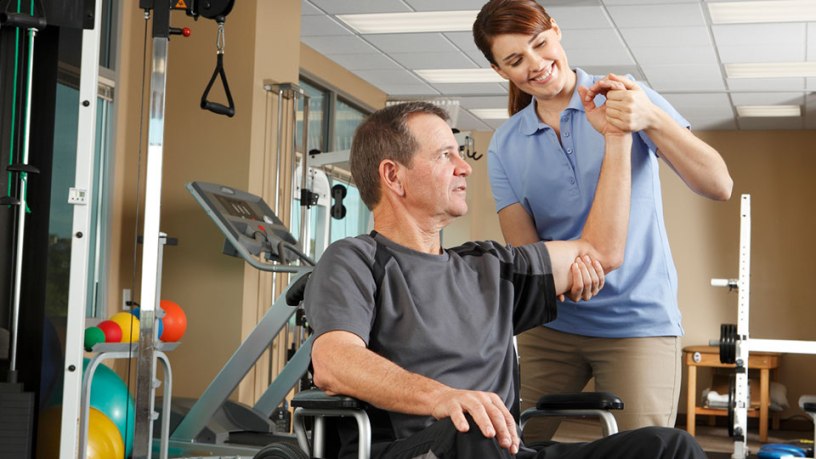
Integrated physical medicine focuses on overall healing to get the best possible results for each patient’s recovery and long-term health. Integrated physical medicine is medicine usually used by chiropractic patients, and it goes beyond treating disease and injury symptoms. It places the patient at the center of all issues, including physical, emotional, mental, social, spiritual, and environmental effects on one’s life. It’s an innovative way to take your practice to the next level by giving your most valuable asset— the patient— complete treatment.
This method is also beneficial in the natural treatment of arthritis. Integrative medicine combines traditional Western medical treatments and complementary and alternative therapies to address arthritic pain.
Here are some of the characteristics of integrated physical medicine.
- It enables medical practitioners to create a treatment plan.
When creating a treatment plan, all elements relating to health, disease, injury, lifestyle, and patient history are considered. The goal of acquiring a health history is to collect subjective data from the patient or family. The healthcare professional and the patient may work together to develop a plan that promotes health, addresses acute health concerns, and minimizes chronic health disorders. Therefore, in integrative care, the patient and physician collaborate to develop and implement a comprehensive care plan.
- It employs natural and non-invasive tactics.
When possible, the most natural and non-invasive tactics are used as the first line of defense. One major advantage of using integrated physical medicine is that it employs the natural tactics and the most non-invasive tactics to cure before going to the invasive strategies. Integrative physical therapy involves treating the whole person, both mind and body, focussing on the fundamental dysfunctions and employing self-healing mechanisms to help overall healing, paying close attention to stress responses and the mind-spirit body link.
- It employs various therapeutic approaches that are well researched.
In recent years, integrative physical medicine has been highly accepted by most patients and physicians due to the effective approaches it employs. To promote optimal health and recovery, it focuses on the complete person, is evidence-based, and employs all applicable treatment techniques, healthcare providers, and disciplines. Practitioners use a wide range of cutting-edge, well-researched therapeutic approaches from various medical fields.
- Treatment options are long term
Another characteristic of integrative physical medicine is that treatment options are designed with long-term wellness in mind to prevent future pain, damage, and disease. Integrative medicine aids patients with chronic and complicated disorders in achieving optimal wellbeing. Integrative medicine employs a range of strategies to provide whole-person treatment and long-lasting effects. It is a hybrid of traditional and complementary medicine. Complementary therapies help you cure your mind, body, and soul by combining standard treatments. These are not intended to be used in place of traditional treatments. They assist you in dealing with symptoms, difficulties, or adverse effects.
- It focuses on the root causes of the illness.
Integrative physical medicine goes beyond symptom management to find and treat the root causes of damage and disease.
PRP therapy, also known as platelet-rich plasma therapy, is a holistic treatment commonly used by integrated medicine practices. PRP is distinctive because it stimulates healing by using a patient’s blood. It also aims at relieving pain and offering healing at any stage of life. With a bit of aid from science, PRP unlocks the potential for the body to unleash its healing powers. You don’t have to be a professional athlete to use PRP to recover from an injury.
Another alternative method for relieving pain is the use of trigger point injections. Muscle pain can be relieved with a trigger point injection. This is also an approach to ease pain where a doctor injects a small needle of anesthesia or steroids into the trigger points.
In conclusion, various approaches are available today to help relieve pain, especially for muscle and joint pains.
 Wellness Care Health Blog