
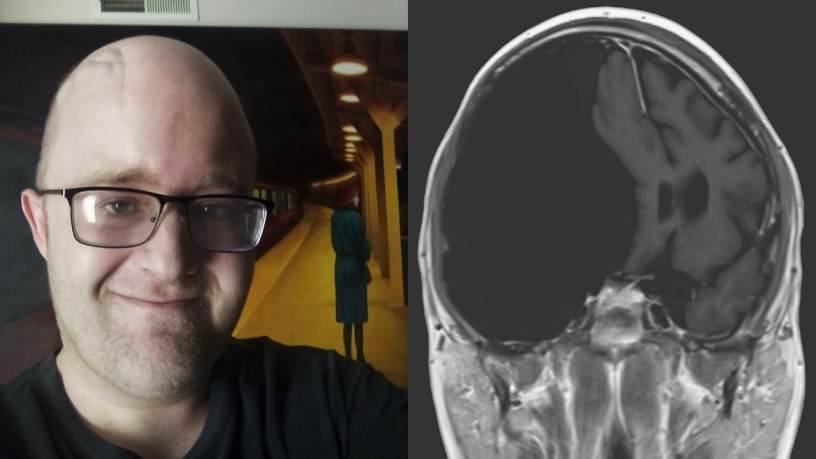
WHAT IS A CYST IN BRAIN?
A cyst in the brain or a cystic brain lesion could be defined as a fluid-filled sac inside the brain. Their intensity may range from being benign to malignant, meaning they could non – cancerous or cancerous respectively. Benign also means that the growth of the cyst does not spread to other parts of the body. Blood, pus, or some other material may be present in the cyst. The cysts in the brain may sometimes also contain cerebrospinal fluid, abbreviated as CSF. It is a clear liquid that cushions and bathes the spinal cord and the brain. There are some cysts in the brain which may begin to grow even before birth.
It is essential to be aware of the fact that a benign cyst is not harmless. It can still cause complications. Pressing against the brain tissue, the cyst may lead to symptoms like constant headache, nausea, or vision problems.
TYPES OF CYST IN BRAIN
There are different types of cysts in brain. They can be differentiated on the basis of the region they are present in, or how harmful they are. Examples include:
– ARACHNOID CYST
– COLLOID CYST
– DERMOID CYST
– EPIDERMOID CYST
– PINEAL CYST
– BRAIN ABSCESS
– NEOPLASTIC CYST
CAUSES OF CYST IN BRAIN
A cyst in brain may be caused due to the building up of fluid in a portion of the brain. When a baby is developing in the uterus, the cyst may start to develop. Other causes can be trauma or injury in the brain. Often, there are links between brain tumors and cystic brain lesions.
SYMPTOMS OF CYST IN BRAIN
The symptoms are generally dependent on different parts of the brain in which the cyst is growing. Small cysts do not cause any symptoms and are therefore hard to detect. They are sometimes also referred to as ‘Silent Cysts’. They do not show any symptoms until they grow large. Common symptoms of cyst in brain may include the following:
- Headache
- Nausea and puking
- Dizziness
- Difficulty in hearing or vision problems
- Facial pain
- Sometimes patients may experience seizures
DIAGNOSIS OF CYST IN BRAIN
Patients are often referred to a neurologist or a neurosurgeon. One specializes in diagnosing and treating diseases of the CNS or central nervous system; the other is a specialist in carrying out brain or spinal cord surgery respectively.
The process of diagnosis starts with a physical exam and study of the medical history of the patient. The tests usually include a CT scan or a Computed Tomography Scan, and MRI Scan or Magnetic Resonance Imaging. If a cyst in brain keeps on growing, repeated scans may be done for diagnosis and check-up.
TREATMENT OF CYST IN BRAIN
If a cyst in brain is growing continuously and causing problems, you will be advised to get it removed via surgery. If the cyst is ‘silent’ and not causing any problems, your healthcare provider may choosebased on to keep it under his/her supervision and carry out repeated scans.
 Wellness Care Health Blog